In the world of lotteries, concepts like probability and randomness are fundamental to understanding how numbers are generated and how they can be interpreted. However, these terms are often used interchangeably, which can create confusion. In this article, from BettyLucky, we will explore scientifically and engagingly how numerology and the innovative Combination Genetics™ methodology help us better differentiate and understand these two key ideas, supported by artificial intelligence (AI) for deep and responsible analysis.
What is probability and how does it relate to lotteries?
Probability is a branch of statistics that measures the likelihood of a specific event occurring within a set of possible events. In lotteries, probability refers to the chance that a number combination will be the winning one in a given draw.
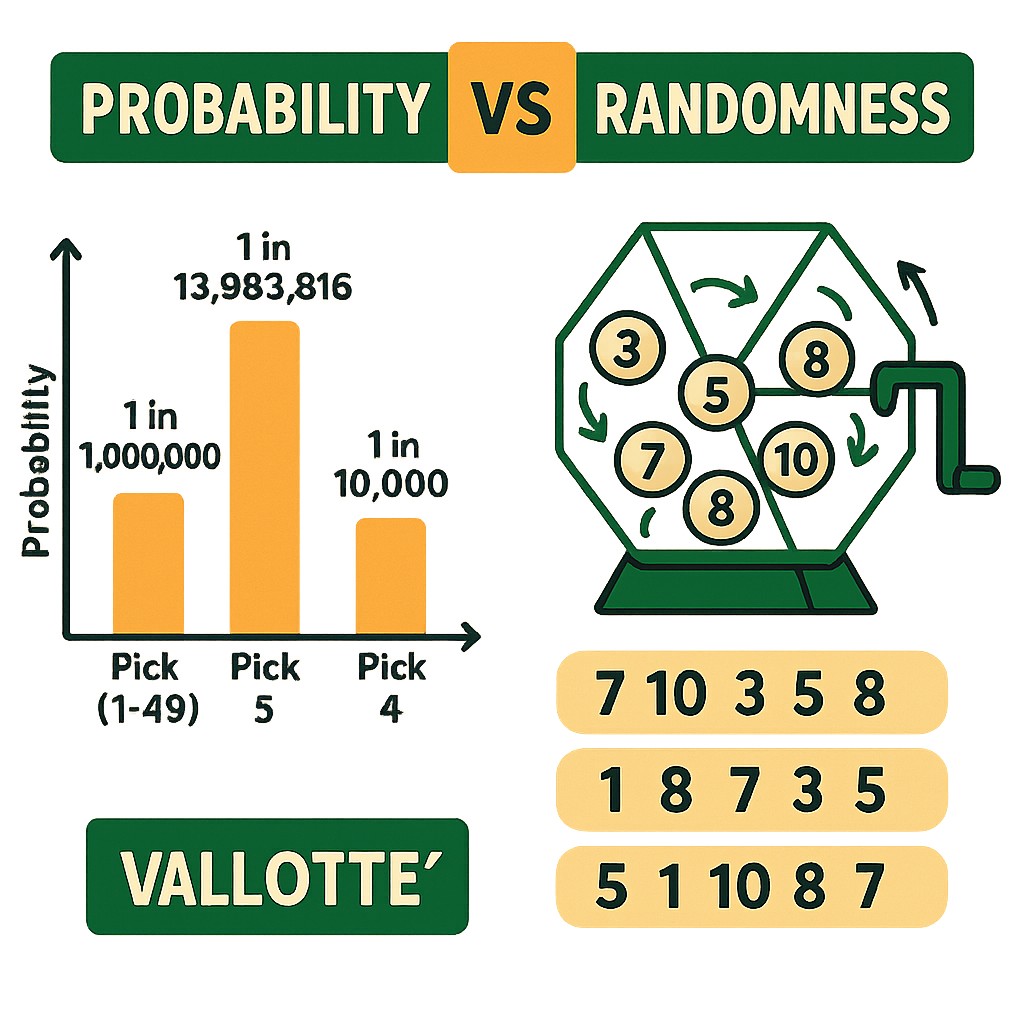
For example, in a typical lottery where you must choose 6 numbers from a set of 49, the probability of matching all 6 numbers is 1 in 13,983,816. This means that, theoretically, each combination has the same chance of being selected, assuming the draw is fair and random.
Table: Probability of matching combinations in different lotteries
| Lottery | Numbers to choose | Total range | Probability of matching the full combination |
|---|---|---|---|
| La Primitiva | 6 | 49 | 1 in 13,983,816 |
| EuroMillions | 5 + 2 stars | 50 + 12 | 1 in 139,838,160 |
| Baloto | 5 + 1 super ball | 43 + 16 | 1 in 15,380,937 |
Probability is based on precise mathematical models and remains constant for each draw, assuming no bias or manipulation.
What is randomness and how does it affect combinations?
Randomness refers to the lack of pattern or predictability in the occurrence of events. In the context of lotteries, winning numbers are drawn randomly to ensure fairness and avoid bias.
However, randomness does not mean that there are no statistical structures or patterns in the broad set of historical results. BettyLucky’s Combination Genetics™ works precisely at this frontier: not to predict results, but to analyze how combinations relate, mutate, and evolve within the historical universe of draws.
Simple example of apparent randomness
If we flip a coin ten times, it might land heads 7 times in a row, which may seem like a pattern to many. However, within randomness, such sequences can occur. Similarly, in the lottery, certain numbers may appear more or less frequently in short periods, but this does not change the random nature of the process.
Numerology and Combination Genetics™: Beyond simple chance
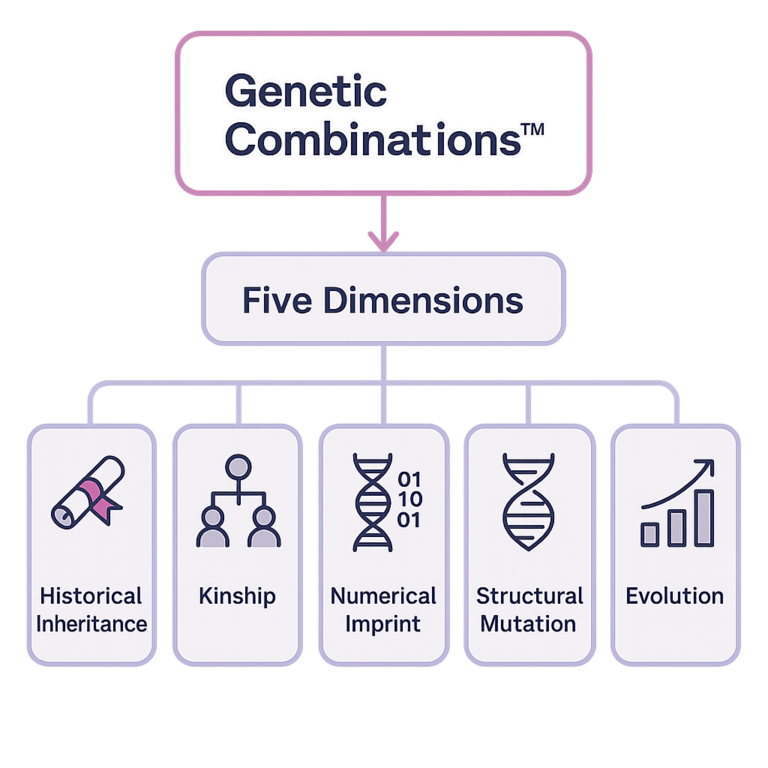
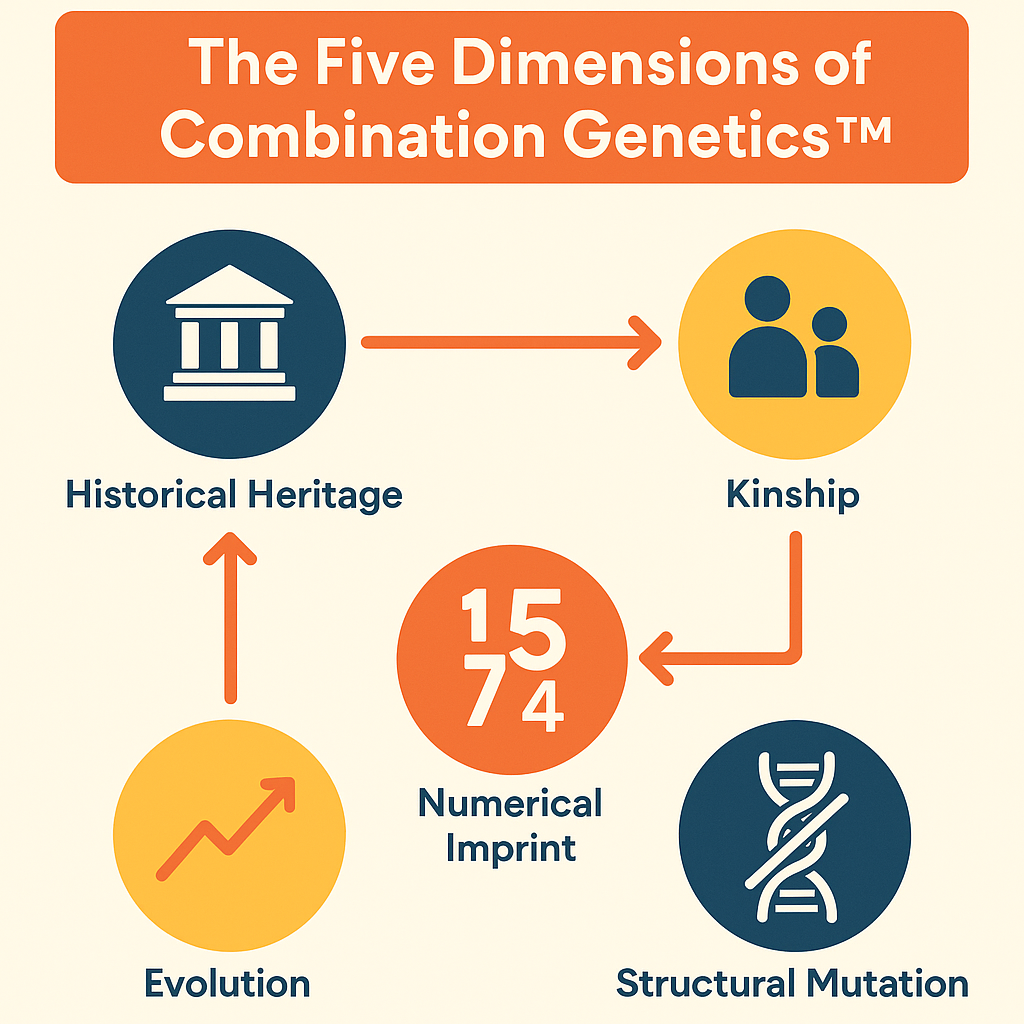
Numerology in BettyLucky’s context does not refer to magical predictions, but to a structured and scientific reading of combinations. Combination Genetics™ is a conceptual methodology that analyzes each play as a complex structure integrated by five dimensions:
- Historical heritage (H): Relationship with past combinations.
- Kinship (P): Closeness with families of similar combinations.
- Numerical imprint (I): Unique structural fingerprint of the combination.
- Structural mutation (M): Variations compared to similar combinations.
- Evolution (E): Cumulative learning as new results are added.
These factors allow interpreting each combination not as isolated numbers but as pieces within a historic and structural tree, facilitating comparison and evaluation with greater criteria.
Probability vs Randomness: How Combination Genetics™ helps differentiate them
While probability tells us how likely a combination is to come out in a draw, randomness ensures each draw is independent and without predictable patterns.
Combination Genetics™ offers a bridge between these concepts by showing that although each result is random, combinations have an internal structure and a history within the result universe that can be analyzed to better understand their context.
Practical example
Suppose we generate two combinations for La Primitiva. Both have the same mathematical probability of being drawn, but one has close kinship with combinations that have appeared in recent draws (high historical heritage), while the other is structurally more distant. Combination Genetics™ allows us to value this difference and choose with more informed criteria, without stating one is a guaranteed winner but offering a deeper analysis.
Role of artificial intelligence at BettyLucky
Artificial intelligence (AI) is key to processing the massive historical data of draws and comparing combinations from multiple structural dimensions. AI does not eliminate chance or predict results but translates this complex analysis into clear explanations and helps generate combinations with context.
Responsible conclusion
In summary, probability and randomness are distinct but complementary concepts in lotteries. Probability is a fixed mathematical measure describing the chance of an event occurring, while randomness is the absence of patterns or predictability in number selection.
BettyLucky’s Combination Genetics™ methodology, supported by AI, offers an educational and analytical tool to better understand the universe of combinations, enrich number generation and evaluation, and play with more informed and responsible criteria.
To explore more, you can check recent lottery results and try all BettyLucky generators.
Frequently Asked Questions (FAQ)
- Does Combination Genetics™ predict winning numbers?
No, this methodology does not promise predictions or guarantees. Its value lies in analysis and structural understanding. - Does probability change based on past results?
No, mathematical probability is constant for each combination, although the methodology analyzes history to provide context. - Can artificial intelligence control chance?
No, AI helps interpret data and structures, but chance remains a fundamental and unpredictable factor. - Can I use this methodology to improve my plays?
Yes, it helps you play with more criteria by better understanding relationships between combinations. - Which lotteries are related to this analysis?
BettyLucky applies this methodology to various lotteries, including Baloto, Cash 3, La Primitiva, among others.