Randomness is a fundamental concept in science, statistics, and especially in lottery games. But what does randomness really mean? In this article, we explore from a scientific and educational perspective what randomness is, how it manifests in lotteries, and how BettyLucky’s proprietary methodology called Genetic Combinations™ helps to better understand it without creating false expectations.
What is randomness in scientific terms?
Randomness is the occurrence of events without a predictable or deterministic pattern. In a lottery game, each number theoretically has the same chance of being selected in each draw, and the selection of numbers is independent of previous draws.
However, randomness does not mean that any pattern or coincidence is impossible. Statistics and probability theory allow us to understand and model these events to evaluate their nature without attributing magical causes or infallible predictions.
Randomness in the lottery: a matter of numbers or structure?
Lotteries are often perceived as pure luck games, where the only strategy is to choose numbers randomly or rely on hunches. However, number combinations can be analyzed beyond their simple list of numbers, considering their structure, history, and relationship with other combinations. This is the basis of BettyLucky’s Genetic Combinations™ methodology.
Genetic Combinations™: a methodology to understand the lottery
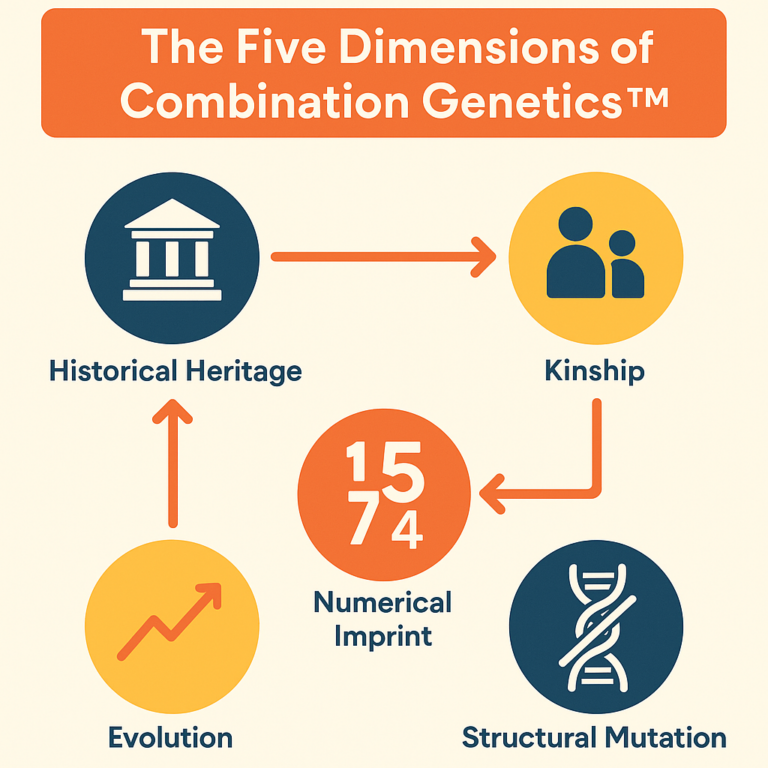
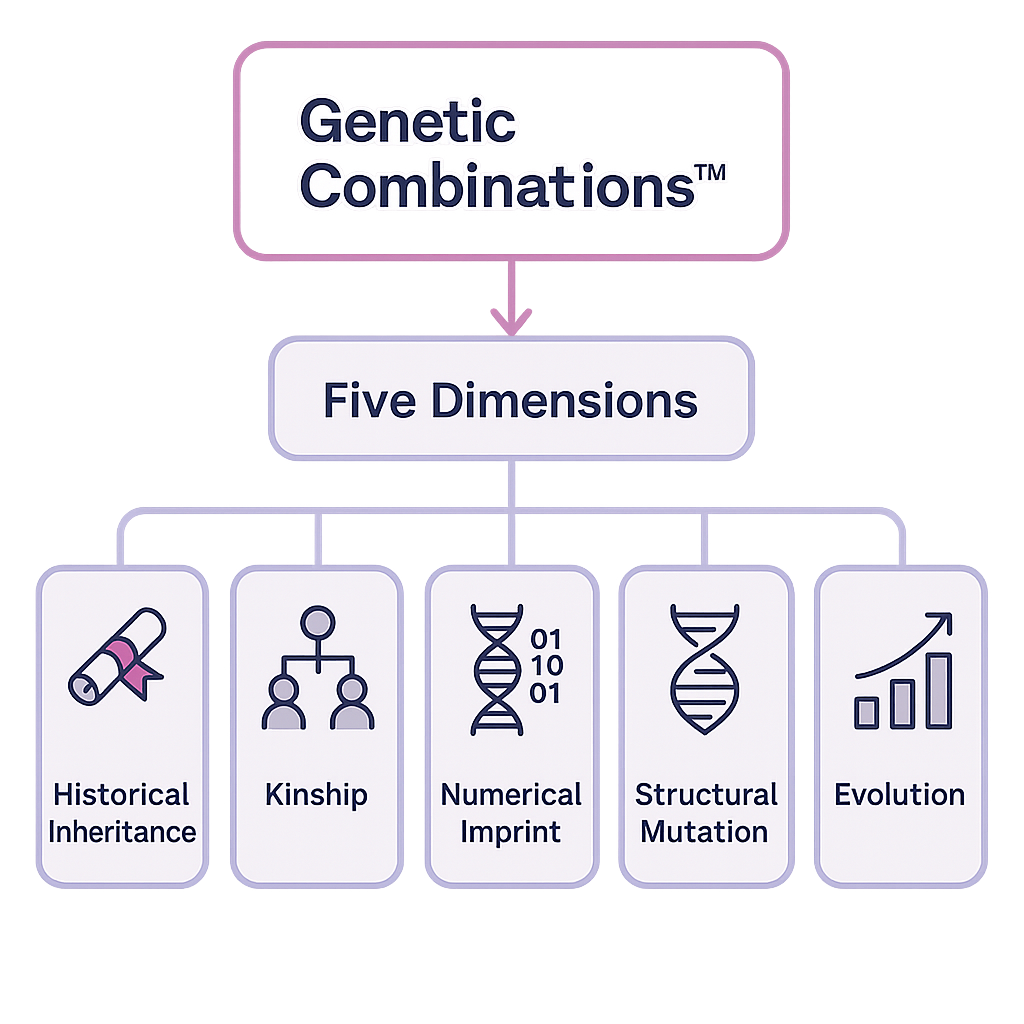
This methodology interprets each combination as a complete structure that can be compared with thousands of previous combinations. It analyzes five main dimensions:
- Historical inheritance (H): Relationship with past combinations and presence in the history.
- Kinship (P): Similarity to families of similar combinations.
- Numerical imprint (I): Own structural fingerprint, distribution, and balance.
- Structural mutation (M): Variations that differentiate similar combinations.
- Evolution (E): Accumulated learning with each new draw.
These dimensions are integrated into a conceptual formula: VGC = H + P + I + M + E, representing the Genetic Value of the Combination. It is not a predictive formula but an analytical tool to evaluate the relative value of a combination within its historical universe.
Illustrative example: analyzing combinations in the Euromillions lottery
Suppose we want to analyze a generated combination for the Euromillions lottery. Genetic Combinations™ allows to:
- Compare the combination with previous Euromillions results to identify historical inheritance.
- Determine if the combination belongs to a similar family of combinations (kinship).
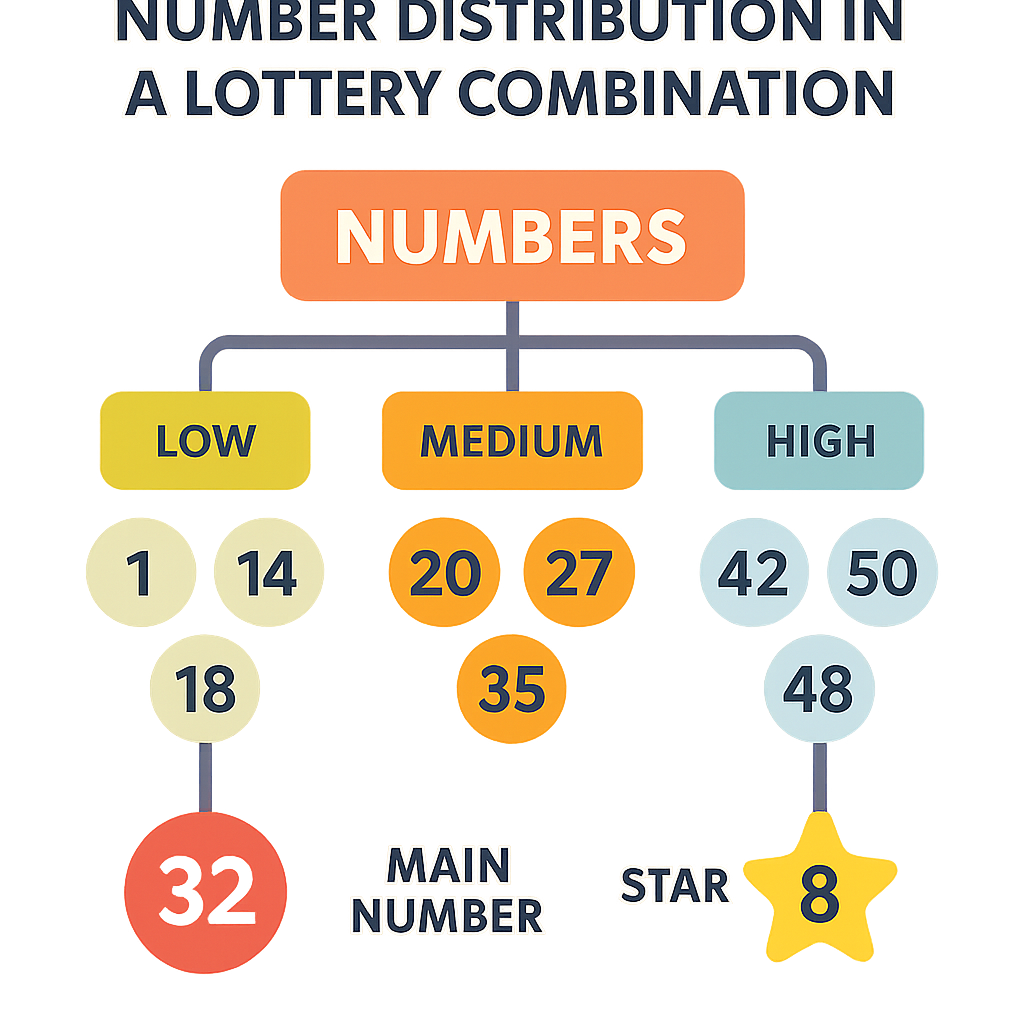
- Study the internal number distribution (numerical imprint) to see its balance between low, medium, and high numbers.
- Detect small variations (mutations) that make the combination unique.
- Incorporate the evolution of analysis as new results accumulate.
Example table: number distribution in a hypothetical Euromillions combination
| Number | Range | Type |
|---|---|---|
| 5 | Low | Main number |
| 18 | Medium | Main number |
| 29 | Medium | Main number |
| 43 | High | Main number |
| 50 | High | Main number |
| 3 | Low | Star |
| 9 | Medium | Star |
This distribution shows a balance between low, medium, and high numbers, which is one of the features the methodology can identify to enrich the evaluation.
How to learn not to depend exclusively on randomness?
Understanding randomness is essential to play lotteries with good judgment. Genetic Combinations™ does not eliminate randomness but helps to better understand the context and structure of combinations, avoiding decisions based solely on hunches or frequent numbers.
Some recommendations for more informed play are:
- Analyze complete combinations: Not just individual numbers but their shape and relationships.
- Use analytical tools: Like BettyLucky’s generators and evaluators to enrich selection.
- Play responsibly: Recognize that randomness cannot be controlled and avoid expectations of guaranteed winnings.
- Follow accumulated learning: Incorporate new information and results to adjust strategies.
Frequently Asked Questions
Does Genetic Combinations™ guarantee a win?
No. This methodology is an analytical tool that helps better understand combinations but does not guarantee results or control randomness.
Can I use this methodology for any lottery?
Yes. The methodology adapts to the rules and characteristics of different lotteries, such as Baloto, Euromillions, or La Primitiva.
How does artificial intelligence help in this analysis?
AI processes large volumes of historical data, compares combinations from multiple dimensions, and generates clear explanations so users understand the value of each play.
Where can I check results and generate combinations?
At BettyLucky, you can check recent lottery results and use all BettyLucky generators to create combinations with intelligent analysis.
Conclusion
Randomness in lottery games is a real and fundamental phenomenon that cannot be eliminated or predicted with certainty. However, a deep understanding of the historical and structural context of combinations through tools like Genetic Combinations™ allows for playing with more judgment, analysis, and responsibility.
BettyLucky positions itself not only as a number generator but as a knowledge laboratory to understand randomness from an educational, technological, and responsible approach.